
Emergency Care
Dental Emergency? Here Is Exactly What to Do in the First 30 Minutes
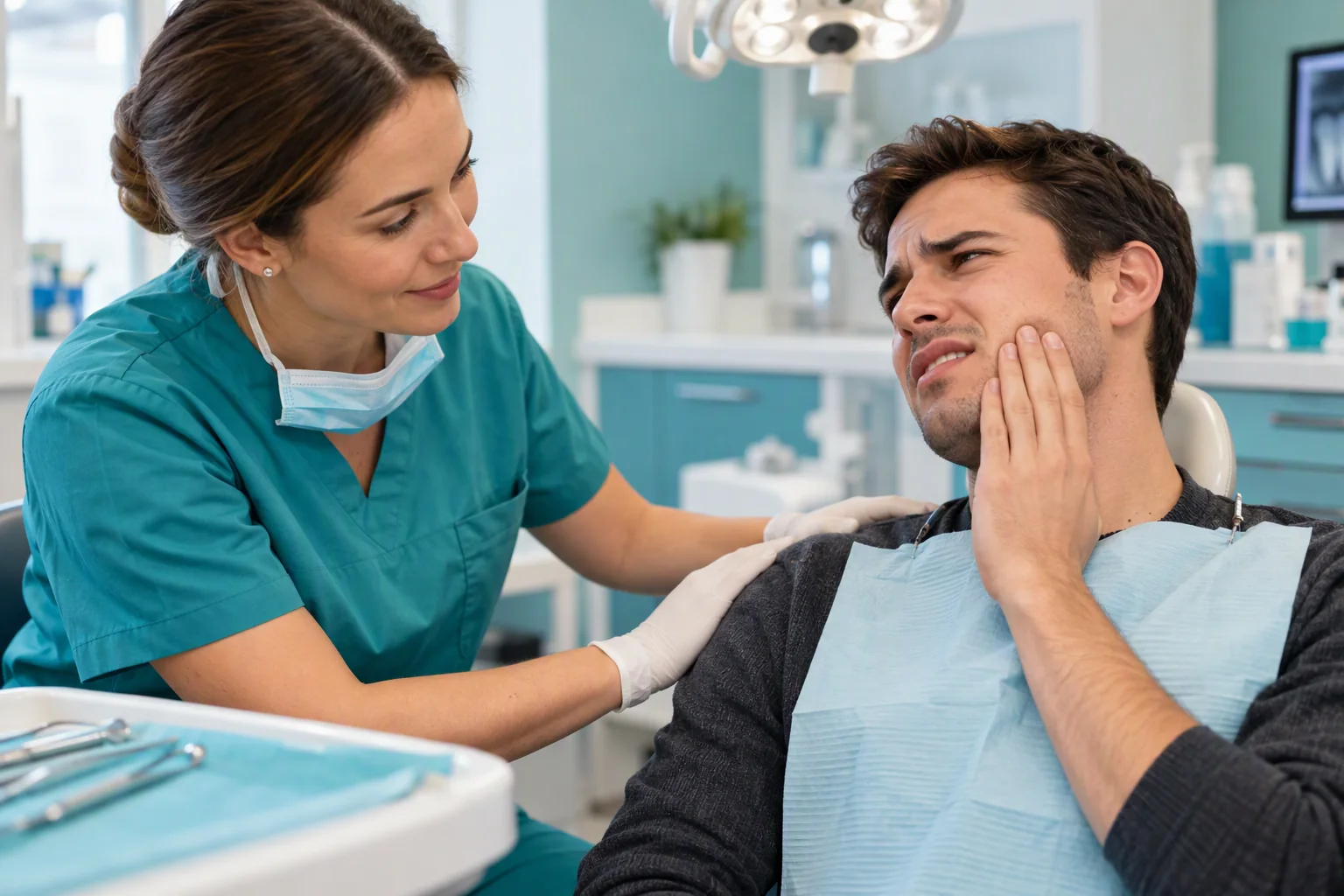
The first thirty minutes of a dental emergency often decide whether a tooth can be saved. Here is what to do for a knocked-out tooth, a broken crown, swelling and severe pain.
- emergency care
- toothache
- dental first aid
Read this first
The first thirty minutes matter more than you think
A dental emergency is frightening, and panic usually causes the most damage. The first thirty minutes are about staying calm, controlling what you can, and getting the right help moving.
A dental office can do far more for you than an emergency room. An ER manages pain and infection, but it cannot splint a tooth back into place. If your airway is safe, calling us is usually faster.
We keep same-day slots open every weekday, and our emergency line at (816) 555-0199 answers 24 hours a day. You can read about urgent care at /services/emergency-dentistry.
The first thirty minutes
What to do, in order
Work through these calmly. If someone is bleeding heavily or struggling to breathe, call 911 first.
-
Stop the bleeding
Bite firmly on clean gauze or a cloth for fifteen to twenty minutes without checking it. A tea bag also works.
-
Handle a knocked-out tooth
Pick it up by the crown, never the root. Rinse gently with milk or saline, and do not scrub or dry it.
-
Keep the tooth moist
Place it back in the socket and bite on a cloth, or keep it in a cup of milk. A dry tooth is a dying tooth.
-
Control pain and swelling
Take ibuprofen if you can safely have it, and hold a cold pack on your cheek. Never put aspirin on the gum.
-
Call us and get moving
Phone (816) 555-0199 on the way so we can talk you through it and have a room ready.
What we see most
The emergencies we handle most often
These four cover the vast majority of urgent calls we take.
-
A tooth knocked out
Get it back in the socket or into milk within thirty minutes and call us immediately.
-
Sudden severe toothache
Throbbing pain that wakes you usually means the nerve is inflamed or infected. Avoid very hot or cold food.
-
A broken or cracked tooth
Rinse with warm salt water, cover any sharp edge with wax, and keep the fragment.
-
Facial or jaw swelling
Swelling spreading toward your eye or throat is a true emergency. Go to the ER if swallowing is affected.
Quick reference
Do this, not that
A few well-meant home remedies do more harm than good.
| Situation | Do | Avoid |
|---|---|---|
| Knocked-out tooth | Hold by the crown, keep it moist in milk | Scrubbing the root or letting it dry |
| Severe toothache | Use ibuprofen and a cold pack, get seen today | Placing aspirin on the gum |
| Broken tooth | Rinse with salt water, save the fragment | Poking the break with a fingernail |
| Swollen face | Call us, go to the ER if breathing is affected | Waiting to see if it settles |
| Lost crown | Keep it, reseat with dental cement | Gluing it with household super glue |
When in doubt, call us. A two minute call is faster than guessing.
Good to know
Emergency questions, answered plainly
These are the calls we take most often.
How long can a knocked-out tooth survive outside the mouth?
If it is kept moist in milk or saline and replanted within about thirty minutes, the odds are much better. After an hour they drop, but it is still worth calling.
Should I go to the ER or call a dentist first?
Call us first unless there is a threat to your airway or a head injury. An ER can manage pain and infection but usually cannot repair a tooth.
Can I put aspirin directly on a sore gum?
No. Aspirin is acidic and will burn the gum tissue. Swallow it as directed if you can safely take it, or use a cold pack instead.
What does an emergency visit cost?
An urgent exam is typically $99 to $150, and we give a written estimate first. A simple extraction runs $150 to $400 and a root canal $700 to $1,200.
Do you see new patients for emergencies?
Yes. Our line is open 24 hours a day for existing and new patients. Call (816) 555-0199 and we will find you a same-day slot whenever we can.
Keep reading
More from the TrueNorth journal
-
 Preventive Care
How Often Should You Actually See the Dentist?
Six months is the right default for many adults, but not for everyone. Here is how dentists choose a recall interval, what changes it, and the warning signs that mean you should not wait.
Read article
Preventive Care
How Often Should You Actually See the Dentist?
Six months is the right default for many adults, but not for everyone. Here is how dentists choose a recall interval, what changes it, and the warning signs that mean you should not wait.
Read article
-
 Orthodontics
Clear Aligners vs Braces: An Honest Comparison
Both options straighten teeth well, but they suit different mouths, budgets and lifestyles. An orthodontist explains who does best with each, what they cost and how long treatment takes.
Read article
Orthodontics
Clear Aligners vs Braces: An Honest Comparison
Both options straighten teeth well, but they suit different mouths, budgets and lifestyles. An orthodontist explains who does best with each, what they cost and how long treatment takes.
Read article
-
 Implant Dentistry
Dental Implants: A Realistic Timeline From Consultation to Final Crown
Dental implants are not a single appointment but a staged process that usually takes four to nine months. Here is what happens at each stage, what it costs and how healing works.
Read article
Implant Dentistry
Dental Implants: A Realistic Timeline From Consultation to Final Crown
Dental implants are not a single appointment but a staged process that usually takes four to nine months. Here is what happens at each stage, what it costs and how healing works.
Read article

In pain right now? Call the emergency line.
Our 24/7 line is answered day and night, and we keep same-day slots open for the northland. If you are worried, a quick call costs nothing.
- Same-day emergency appointments
- $99 new-patient special
- Written estimates before treatment
Two ways to start
Contact us now Call (816) 555-0182Mon–Thu 8a–6p · Fri 8a–5p · Sat 9a–2p
In pain now? Call (816) 555-0199